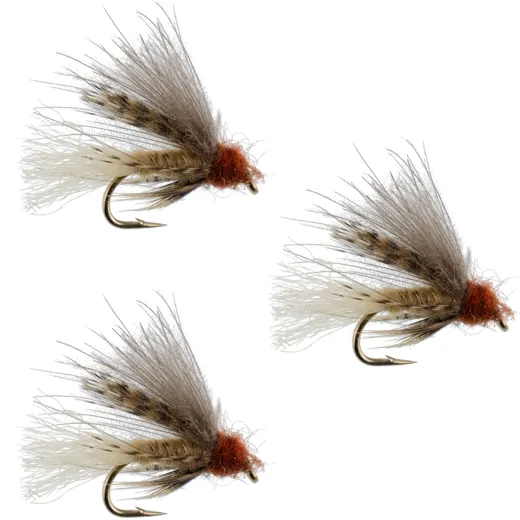
3 Pack Tan CDC Caddis Emerger Flies – Hook Size 14
The CDC Caddis Emerger is a highly effective emerger pattern using genuine Cul de Canard (CDC) feathers. Popularized in the 1980s–1990s by European tiers such as Marc Petitjean, this pattern is known for its unmatched natural flotation and lifelike movement on the surface film.
Designed to mimic caddis pupae rising to the surface during hatches, this imitation features a realistic low-riding profile that triggers selective feeding trout.
Each fly is hand-tied with premium CDC feathers for superior natural appearance and performance in surface fishing conditions.
| Specification | Detail |
|---|---|
| Pattern Type | Caddis Emerger |
| Feather Type | Genuine CDC Feathers |
| Hook Size | 14 |
| Quantity | 3 Flies |
| Color | Tan |
FAQ
What makes the CDC Caddis Emerger different from other caddis patterns?
The CDC Caddis Emerger uses genuine Cul de Canard feathers, providing superior natural flotation and lifelike movement on the water’s surface, which mimics the actual behavior of caddis pupae rising during hatches.
Is this pattern suitable for trout fishing in still or moving water?
Yes, this pattern works well in both still and moving water due to its natural floating action and realistic profile, making it effective during surface hatches.
Are the CDC feathers hand-tied or machine-made?
The flies are hand-tied with genuine CDC feathers to ensure quality and natural appearance.
Ruth Ellison –
These tan CDC caddis emergers perform well in surface fishing. The natural floating action and realistic profile make them effective during caddis hatches. I’ve used them on both still and moving water and noticed trout taking them consistently.
Wanda Gibson –
The hand-tied construction and genuine CDC feathers give these flies a lifelike appearance. They float naturally and trigger strikes from trout during surface hatches. Great value for the quality.
Leah Kerr –
I’ve tried several emergers, and these stand out for their natural movement. The tan color matches well with typical hatch conditions. A bit more expensive, but worth it for performance.