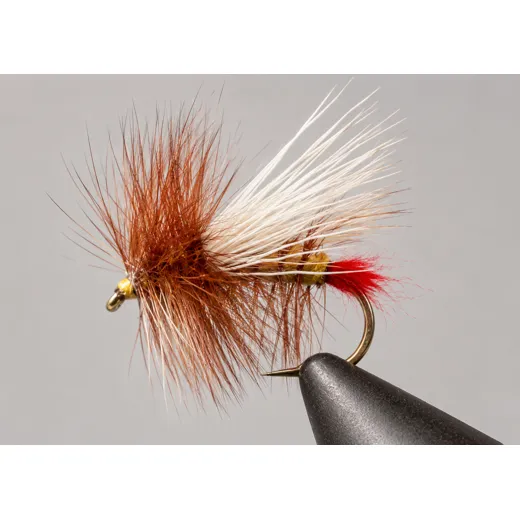
Little Yellow Sally
A proven small stonefly imitation, the Little Yellow Sally is designed to match the Isoperla stoneflies commonly found on trout streams throughout North America. With its slim yellow profile, elk hair wings, and subtle red butt, this pattern offers a realistic presentation trout readily recognize.
Lightweight and highly buoyant, the Little Yellow Sally performs well in both slow and moving water, especially during summer stonefly activity when trout are feeding selectively near the surface. Its natural silhouette and easy-to-see profile make it an excellent choice for rivers, freestone streams, and technical trout water.
A must-have pattern during Yellow Sally hatches, this fly consistently produces fish when trout are focused on smaller stoneflies.
| Feature | Detail |
|---|---|
| Pattern Type | Stonefly imitation |
| Color | Yellow body with red butt |
| Wings | Elk hair wings |
| Weight | Lightweight |
| Best Use | Summer stonefly hatches, rivers, freestone streams, technical water |
FAQ
What type of water conditions work best with the Little Yellow Sally?
The Little Yellow Sally performs well in both slow and moving water, especially during summer stonefly hatches when trout are feeding near the surface in rivers, freestone streams, and technical trout water.
Is the Little Yellow Sally suitable for beginners?
Yes, due to its natural profile and easy-to-see design, the Little Yellow Sally is accessible for anglers of various experience levels, particularly those targeting trout during stonefly hatches.
How does the Little Yellow Sally compare to other small stonefly imitations?
It closely mimics the Isoperla stonefly, offering a realistic yellow body and red butt with elk hair wings, making it a reliable choice during active hatches when trout are selective about their prey.

Tracey Manning –
Used the Little Yellow Sally during a summer hatch on a clear mountain stream. Trout took it immediately, even in fast water. The yellow body and red butt stood out, and it floated naturally without sinking. Great for targeting surface feeders.
Alexandra Randall –
Felt like a natural match for the stoneflies in the stream. Worked well in both still and moving water. A little more buoyant than expected, which helped keep it visible on the surface.
Victor Churchill –
Caught three fish in one hour using this pattern during a mid-summer hatch. The elk hair wings added realism, and the red butt made it easy to spot. Highly recommended for summer trout fishing.
Ella Springer –
It’s a solid choice for small stonefly hatches. Not flashy, but effective. Works best when the water is calm and the sun is low, which helps with visibility.
Bernadette Hughes –
Fished it on a freestone stream with mixed success. Took a few fish, especially when the current was slow. The pattern stayed on the surface and didn’t sink, which helped with presentation.