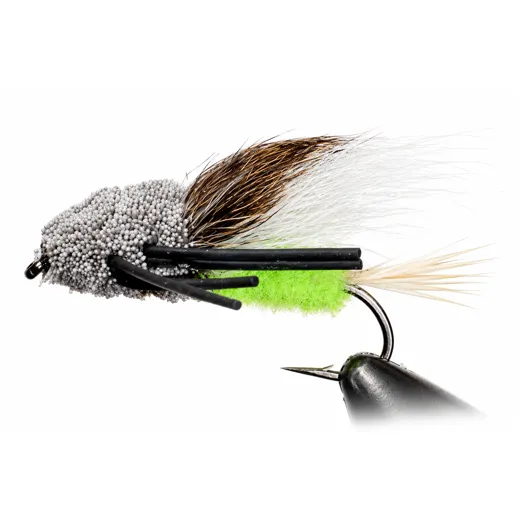
Tarantula Stone/Salmonfly – 7 Colors
These Tarantula Stone/Salmonfly flies are on clearance, so some patterns may vary slightly in size and appearance, but they remain excellent fish-catching flies built to attract aggressive strikes from trout.
Also known as “Turk’s Tarantula,” this proven attractor pattern imitates a wide variety of large insects including caddisflies, salmonflies, stoneflies, and even hoppers. Its oversized buggy profile, heavy hackle, and high-floating design make it an outstanding searching pattern for rivers, freestone streams, and bank-feeding trout.
Despite the name, the Tarantula is less about imitating a spider and more about suggesting a large, hairy meal drifting naturally near the bank — exactly the kind of target big trout key in on during dry season.
| Color Options | Pattern Type | Best Use |
|---|---|---|
| Stone | Stonefly imitation | Rivers, freestone streams |
| Salmonfly | Salmonfly imitation | Bank-feeding trout |
| Black | Dark insect profile | Low light conditions |
| Red | High visibility | Clear water streams |
| Blue | Contrast pattern | Fast-moving water |
| Orange | Attractive to trout | Early morning fishing |
| Green | Camouflage in vegetation | Overhanging banks |
FAQ
What types of trout are most likely to strike the Tarantula Stone/Salmonfly?
Big trout, especially those feeding on bank-feeding habits, are most likely to strike this pattern due to its large, hairy profile and natural drift behavior.
How does the Tarantula pattern compare to other large insect imitations?
The Tarantula stands out with its oversized buggy profile and heavy hackle, making it more effective than standard patterns in attracting aggressive strikes in fast-moving or open water conditions.
Are the color variations consistent across all patterns?
Color variations may differ slightly due to clearance production, but all patterns maintain the same core design and fishing performance.

Jonathan Duncan –
Fished this pattern on a cold spring morning in a mountain stream. The heavy hackle and floating action drew in a large brown trout that took it on the first cast. Great for bank feeding conditions.
Tim Young –
Used the red and green versions in a freestone stream. The green one blended well with the bank, while the red stood out in clear water. Trout were responsive, especially during early morning hours.
Emily Gill –
This is a reliable pattern for targeting aggressive trout. The high-floating design works well in fast currents. I’ve used it in multiple rivers and it consistently draws strikes.
Alan Davidson –
The pattern works, but the size variation between colors is noticeable. Some flies appear slightly smaller than expected. Still effective, just not as uniform as hoped.
Jake Edmunds –
Excellent for dry season fishing. The Tarantula mimics a large insect drifting naturally, which big trout are always looking for. Easy to tie and performs well in both still and moving water.