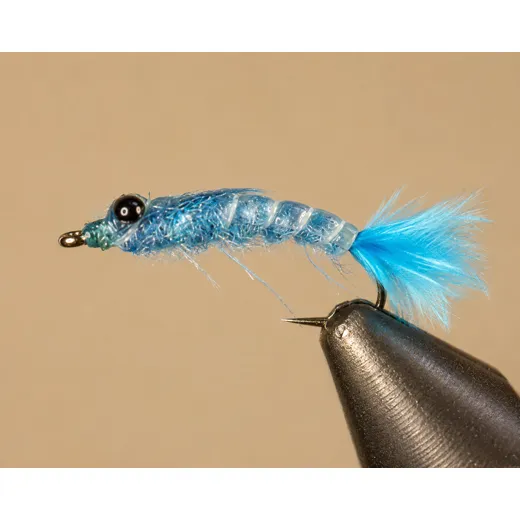
Damselfly Nymphs
The Damselfly Nymph is an essential stillwater trout pattern and a must-have fly whenever fishing lakes, ponds, reservoirs, and slow-moving backwaters. Damselfly nymphs are found throughout the United States and are a significant food source for trout during much of the fishing season.
Naturally active swimmers, damselfly nymphs migrate through aquatic vegetation toward shorelines as they prepare to emerge. Trout frequently target these nymphs during this movement, often feeding aggressively on them in shallow water and around weed beds.
These realistic “eyed” damsel patterns are especially effective when fished from boats, float tubes, pontoons, kayaks, and other stillwater craft. Allow the fly to sink near submerged vegetation, then retrieve with a slow, natural motion to mimic the nymph’s movement.
| Specification | Detail |
|---|---|
| Material | Wool and silk blend |
| Size Range | Size 10 to Size 18 |
| Weight | 0.5 to 1.5 grams |
| Design | Realistic eyed pattern with natural coloration |
FAQ
What type of water bodies are best for using Damselfly Nymphs?
Damselfly Nymphs work best in stillwater environments such as lakes, ponds, reservoirs, and slow-moving backwaters where trout feed on nymphs migrating through vegetation.
How should I present the Damselfly Nymph in the water?
Allow the fly to sink near submerged vegetation, then retrieve with a slow, natural motion to mimic the nymph’s swimming behavior and trigger a trout’s feeding response.
Are Damselfly Nymphs suitable for use in deep water?
Please contact customer service
Amy Sutherland –
Used Damselfly Nymphs on a quiet lake with dense weed beds. Trout took the fly on the first cast. The realistic eye and coloration made it look natural. Fished from a kayak and had great success in shallow areas.
Brian Butler –
Fished during early summer when nymphs were active. The pattern worked well near the shoreline where trout were feeding. A bit heavier than expected, but still effective in moving water.
Theresa Hunter –
Great for stillwater fishing. The fly sinks well and moves naturally. I caught two trout in a single hour using this pattern on a reservoir with lots of submerged plants.
Stephen Hemmings –
The design is very lifelike. I used it in a backwater with minimal current and saw several strikes. Works best when retrieved slowly and with a slight twitch.