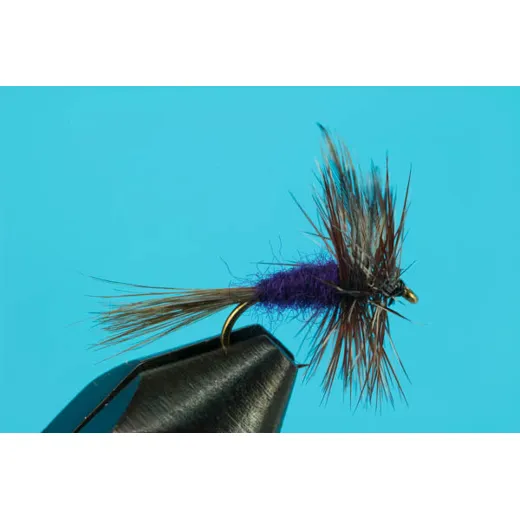
Purple Adams Dry Fly
The Adams is one of the most successful dry fly patterns of all time. It can be used to imitate a plethora of mayfly hatches, including baetis, callibaetis, and the drakes. Also effective for caddis in-flight and as a general ‘cast and see’ pattern. Often the first dry fly anglers cast when nothing obvious is going on.
Invented in 1922 by Leonard Halladay and named after his friend Charles Adams. This version features a modern purple coloration, offering a natural and visible imitation in various water conditions.
| Pattern | Color | Use Case |
|---|---|---|
| Adams | Purple | Mayfly imitations, caddis in-flight, general dry fly fishing |
FAQ
What types of mayfly hatches does the Purple Adams imitate?
The Purple Adams can imitate baetis, callibaetis, and mayfly drakes.
Is the purple coloration effective in natural water conditions?
Yes, the purple color provides good visibility in various water conditions and mimics natural mayfly hatches.
Can this fly be used for caddis in-flight?
Yes, it is also effective for caddis in-flight and as a general ‘cast and see’ pattern.
Andrew Lewis –
The purple Adams worked well in a slow-moving stream. I used it during a dry spell when other flies weren’t biting. It caught a few trout on the surface, and the color stood out well in the morning light.
Natalie James –
I’ve fished the Adams pattern for years, and this purple version feels natural. It’s reliable when the water is still and the flies are not actively hatching.
Michael North –
Great addition to my dry fly collection. The purple shade matches the natural color of some mayflies in spring. I caught a trout on the first cast after a long dry spell.