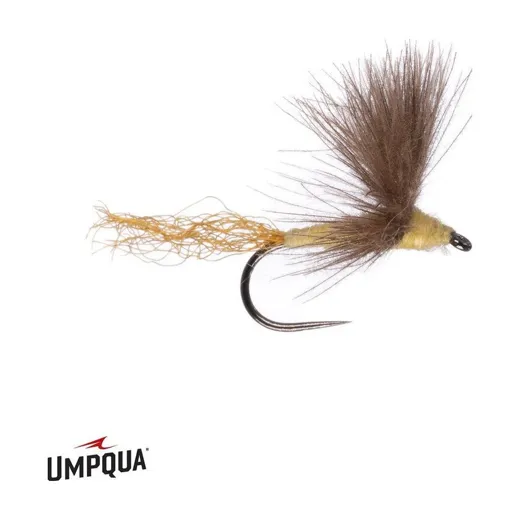
Umpqua CDC Sparkle Dun – PMD
Successful anglers from around the world know of the virtues of CDC feathers used in fly patterns to fool the most selective trout.
CDC feather wings used in important mayfly patterns like Baetis, Pale Morning Duns and Green Drakes float like corks, and are the exact coloration and profile to match natural insects’ big trout feed on.
Umpqua first used CDC feathers for winging its famous Sparkle Duns several years ago. After extensive testing on Yellowstone Country’s spring creeks and smooth flowing rivers such as the Missouri, Bighorn, Firehole, Madison, and Lamar, the pattern proved highly effective. It has since become a valuable addition to anglers fishing big-finicky surface-feeding trout in regions like Montana, Yellowstone, Idaho, and Patagonia.
| Feature | Detail |
|---|---|
| Feather Type | CDC Feather |
| Pattern Type | Sparkle Dun – PMD |
| Best For | Surface feeding trout |
| Target Insects | Pale Morning Duns, Baetis, Green Drakes |
FAQ
What makes CDC feathers suitable for trout fly patterns?
CDC feathers float like corks and closely match the natural coloration and profile of mayfly insects, making them highly effective at mimicking real prey for selective trout.
Where have the Sparkle Dun patterns been tested?
The Sparkle Dun pattern has been tested on spring creeks and smooth flowing rivers including the Missouri, Bighorn, Firehole, Madison, and Lamar in Yellowstone Country.
Is the Sparkle Dun suitable for fishing in Patagonia?
Yes, the Sparkle Dun is designed for surface-feeding trout and has proven effective in regions like Patagonia where similar trout habits are found.


Joe Langdon –
Fished the Sparkle Dun on the Madison River and it floated perfectly. The CDC wing matched the natural mayfly and attracted trout on the surface. Great for spring runs when trout are active on the surface.
Leonard Underwood –
Used it in Idaho and saw consistent strikes. The wing floats naturally and doesn’t drag. Works well in both slow and moderate current conditions.
Kylie Bell –
The pattern responded well in the Bighorn River. Trout were actively feeding on the surface, and the CDC wing made it look like a real insect. Highly recommended for surface fishing.