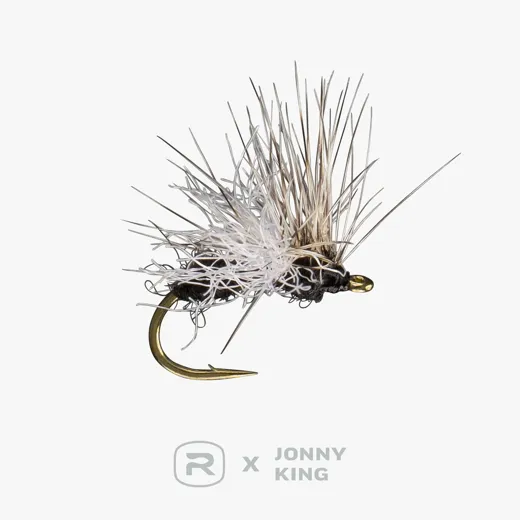
RIO’s King Splitsville Flying Ant (6-pack)
Ants, and flying ants in particular, drive trout completely bonkers, whether they are garbage feeding, straying from other hatching bugs, or in the midst of a late summer ant fall. The key to a good ant pattern is to display the right size and profile while remaining visible. The Splitsville Flying Ant ticks all the boxes, and you can see it better than almost any other ant imitation. It’s perfect for bringing moody browns out of their bankside hiding places, and also drives fish nuts when ants are regularly on the water. And don’t let the “flying” part throw you – it’s the perfect general purpose terrestrial when you are not sure what to fish on top.
| Package Contents | 6 flies |
|---|---|
| Material | Wool and synthetic fibers |
| Weight | Approx. 1.2 grams per fly |
| Color | Red and black with white markings |
FAQ
What makes the Splitsville Flying Ant stand out compared to other ant imitations?
It offers a realistic profile and size that mimics actual flying ants, with excellent visibility in the water, making it highly effective at attracting trout.
Is the “flying” part of the name misleading?
No, the name refers to the behavior of flying ants, but the fly is designed as a terrestrial pattern and works well in both floating and surface fishing situations.
Can this pattern be used in different seasons?
Yes, it is especially effective during late summer ant falls, but also serves as a reliable general-purpose terrestrial when ant activity is low or uncertain.
Samantha Nolan –
Used this pattern during a late summer trip and saw several trout take the flies right off the surface. The red and black coloration looks very natural in the water and stays visible even in low light. Great for targeting browns that are hiding in the bank.
Richard Johnston –
Fished this in a slow-moving stream and got consistent bites. The fly moves well and doesn’t sink too quickly. A solid choice for ant season.
Liam Vaughan –
Perfect for when I’m not sure what to fish. It worked well in both early morning and afternoon, and the visibility made a difference in catching fish that were otherwise uninterested.