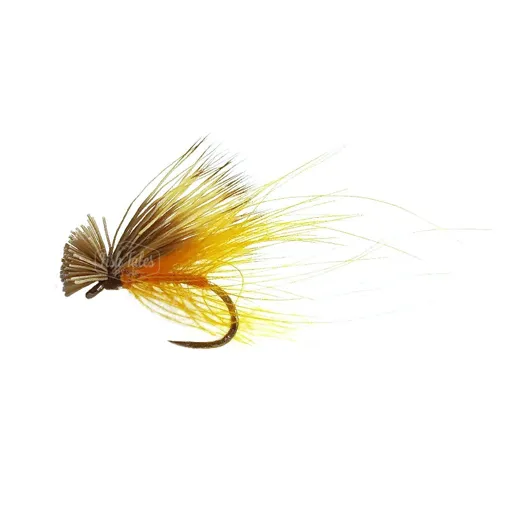
Freestone Flies CDC Elk Hair Caddis Dry Fly
The Freestone Flies CDC Elk Hair Caddis Dry Fly features a wispy CDC body instead of the traditionally used saddle hackle. This both adds buoyancy to this pattern as well as the appearance of a trailing shuck. Fish will key in on newly emerged insects with trailing shucks attached because they take longer to launch off the water’s surface and are less likely to escape.
- Adult caddis fly imitation
- Elk Hair caddis variation
- CDC body for buoyancy and trailing shuck
- Freshwater trout fly
- Sold individually
| Feature | Description |
|---|---|
| Body Type | CDC |
| Pattern Type | Dry Fly |
| Target Species | Trout |
| Usage | Freshwater fishing |
| Shipping | Within Canada only |
FAQ
What makes the CDC body different from traditional saddle hackle?
The CDC body provides better buoyancy and mimics the appearance of a trailing shuck, which is more attractive to trout as it resembles newly emerged insects that take longer to launch from the water.
Is this fly suitable for all types of trout?
This dry fly is specifically designed for freshwater trout and works best in environments where caddis fly imitations are active.
Can this fly be used in still waters or only moving water?
It is effective in both still and moving waters, as long as the conditions match the natural emergence of caddis flies.
Stewart Anderson –
This fly performs well in early morning fishing. The CDC body gives it a natural float and looks realistic when fished. I caught several trout on it during a cold spring day.
Max Berry –
The detail on the elk hair is sharp and the CDC body holds up well in the water. It’s a good choice for dry fly fishing in clear streams.
Emma Langdon –
I’ve used this pattern in multiple lakes and it consistently draws fish. The trailing shuck effect is noticeable and makes a difference in catch rates.
Jonathan Ross –
It works okay, but the CDC body can be a bit stiff in windy conditions. Still, it’s a solid option for dry fly fishing in trout streams.