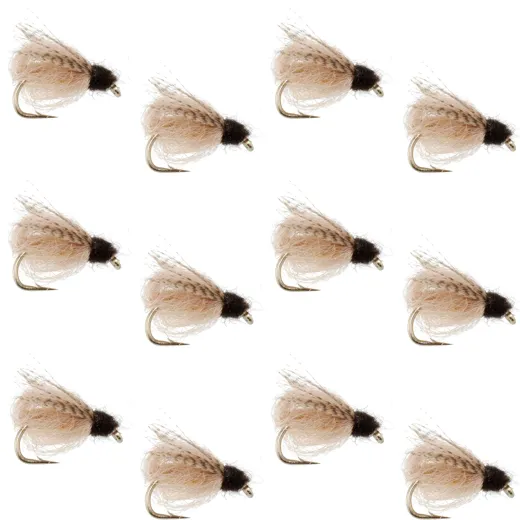
LaFontaine Tan Deep Sparkle Caddis Pupa – 1 Dozen Flies, Hook Size 12
Deep Sparkle Caddis Pupa — Created by Gary LaFontaine in the mid-1970s after three years of scuba diving to observe live caddis behavior underwater; featured in his 1981 book Caddisflies, this pattern imitates the early emergence stage of pupae drifting near the bottom.
Early-Stage Caddis Pupa Imitation — Represents caddis pupae as they exit their cocoons and drift along the riverbed or mid-water column during spring through fall hatches; the sparkle yarn imitates trapped air bubbles around the pupa.
| Specification | Detail |
|---|---|
| Product Name | LaFontaine Tan Deep Sparkle Caddis Pupa |
| Quantity | 1 Dozen |
| Hook Size | 12 |
| Pattern Type | Early-Stage Caddis Pupa |
| Material | Sparkle Yarn, Wool, Thread |
FAQ
What does the sparkle yarn in the caddis pupa imitation represent?
The sparkle yarn imitates trapped air bubbles around the pupa, which helps the fly look more realistic when drifting in water.
Is this pattern suitable for use during spring and fall hatches?
Yes, this pattern is designed to mimic caddis pupae during spring through fall hatches when they drift along riverbeds or mid-water columns.
Where was the design originally inspired by?
The design was inspired by observations of live caddis behavior made during scuba diving in the 1970s by Gary LaFontaine, as documented in his 1981 book <em>Caddisflies</em>.
Olivia MacDonald –
This fly performs well in slow-moving streams during early spring. The sparkle yarn adds a natural look when the pupa drifts near the bottom. I’ve used it during multiple hatches and caught several trout with it.
Kevin Hart –
The tan color matches the natural water conditions well. The hook size 12 fits perfectly on my favorite spinning rod. It’s a faithful imitation of early pupae and works well in mid-water drifts.
Trevor Mackenzie –
I bought this after reading about LaFontaine’s original design. The attention to detail in the sparkle yarn makes it stand out in the water. It’s one of my go-to patterns for fall hatches.