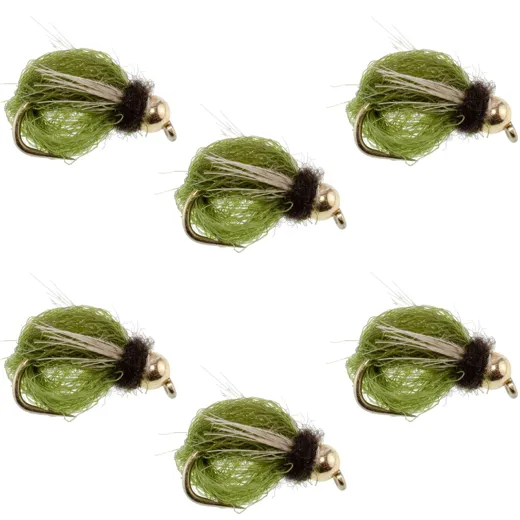
LaFontaine Olive Deep Sparkle Caddis Pupa – 6 Flies Hook Size 12
Deep Sparkle Caddis Pupa — Created by Gary LaFontaine in the mid-1970s after three years of scuba diving to observe live caddis behavior underwater; featured in his 1981 book Caddisflies, this pattern imitates the early emergence stage of pupae drifting near the bottom.
Early-Stage Caddis Pupa Imitation — Represents caddis pupae as they exit their cocoons and drift along the riverbed or mid-water column during spring through fall hatches; the sparkle yarn imitates trapped air bubbles around the pupa.
| Specification | Detail |
|---|---|
| Pattern Type | Caddis Pupa |
| Color | Olive |
| Hook Size | 12 |
| Quantity | 6 Flies |
| Material | Wool, Sparkle Yarn |
FAQ
What does the sparkle yarn in the caddis pupa imitation represent?
The sparkle yarn imitates trapped air bubbles around the pupa as it drifts in the water.
When is the best time to use this fly pattern?
This pattern is effective during spring through fall hatches when caddis pupae emerge and drift near the riverbed or mid-water column.
Is this pattern based on real observations of caddis behavior?
Yes, it was developed by Gary LaFontaine after three years of scuba diving to observe live caddis behavior underwater.
Boris Knox –
This fly performs well in clear streams during early spring. The olive color and sparkle yarn match the natural pupae drift perfectly. I caught several trout using it on a slow retrieve.
Christian Skinner –
The detail in the pattern is impressive. The sparkle gives a realistic look to the pupa’s surface. Works well in moderate current conditions.
Samantha Parsons –
I’ve used this fly in multiple rivers and it consistently attracts fish during fall hatches. The hook size is ideal for medium-sized streams.
Jessica Churchill –
The fly holds up well in water with some silt. The sparkle effect is subtle but effective, especially when the water is still.
Alan Springer –
Great match for early emergence hatches. The design is faithful to LaFontaine’s original pattern and works well with a slow, natural drift.