Real African Lungfish Skeleton – Partial
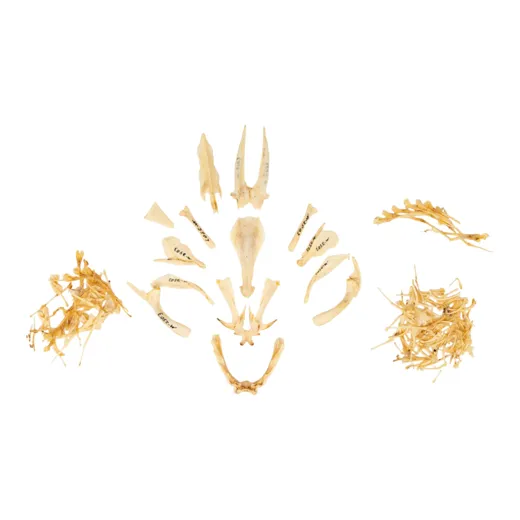
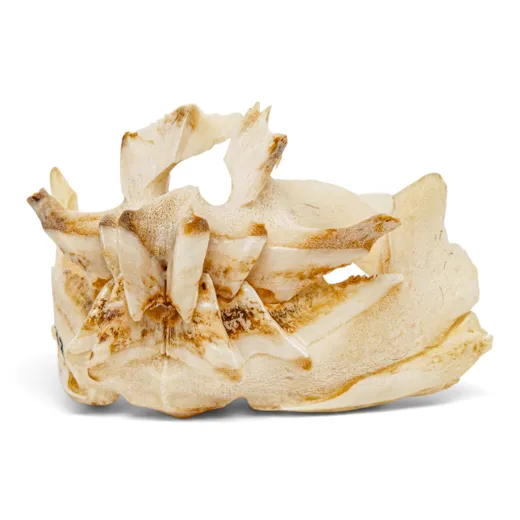
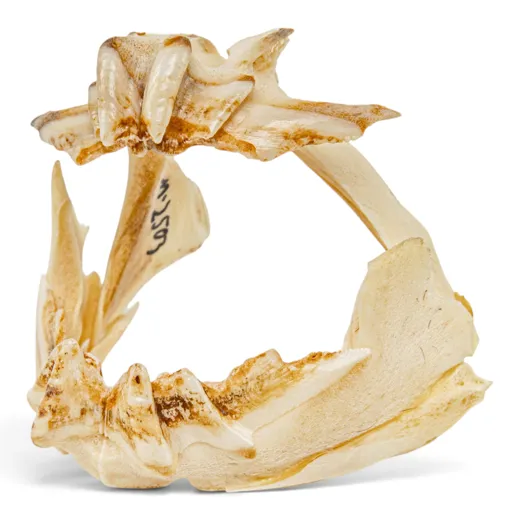
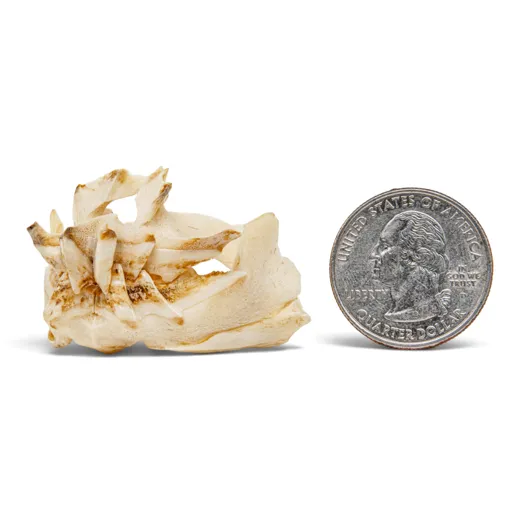
This partial African Lungfish skeleton is a compact yet scientifically significant specimen. The cranial elements bear hand-written documentation, preserving detailed provenance information. Despite its small size, this skeleton represents one of nature’s most extraordinary adaptations—a fish capable of dual respiration through gills and primitive lungs, and able to survive months of drought in dormancy. An exceptional addition for collectors and educators interested in vertebrate evolution and paleontology.
The West African Lungfish is a remarkable freshwater fish native to rivers, floodplains, and swamps throughout western and central Africa. As one of the world’s few living lungfish species, it possesses both gills and a primitive lung, allowing it to survive in low-oxygen environments and endure prolonged dry periods.
| Specimen Type | Partial skeleton |
|---|---|
| Species | West African Lungfish |
| Origin | Western and central Africa |
| Respiration Method | Gills and primitive lung |
| Key Feature | Capable of surviving months without water |
FAQ
What makes the West African Lungfish unique among fish species?
The West African Lungfish is unique because it can breathe through both gills and a primitive lung, allowing it to survive in low-oxygen environments and endure prolonged dry periods by entering a dormant state.
Is the documentation on the skeleton authentic?
Yes, the hand-written documentation on the cranial elements is part of the specimen’s provenance and has been preserved as part of the collection.
Can this skeleton be used for educational purposes?
Yes, this skeleton is suitable for educational use, particularly in discussions about vertebrate evolution, adaptation, and the biology of ancient fish species.


Andrew Baker –
Received the lungfish skeleton in excellent condition. The documentation is clear and adds real value to the specimen. Perfect for a classroom or home collection focused on evolutionary biology.
Hannah McLean –
The partial skeleton is well-preserved and shows clear anatomical details. The hand-written notes provide useful context about its origin and history. A great educational tool.
Steven Peake –
As a biology teacher, I appreciate the scientific accuracy and the unique adaptation of the lungfish. It helps students understand how fish evolved to survive in changing environments.