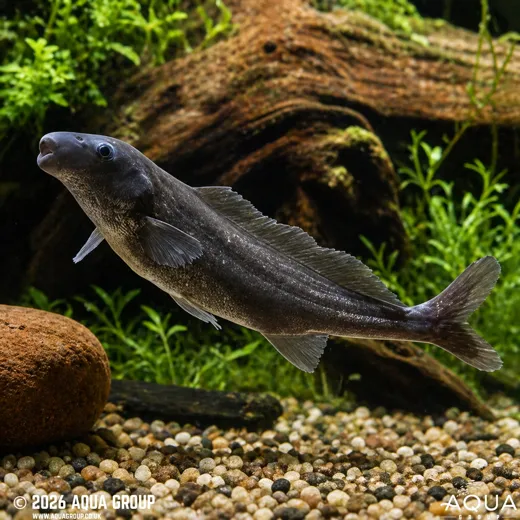
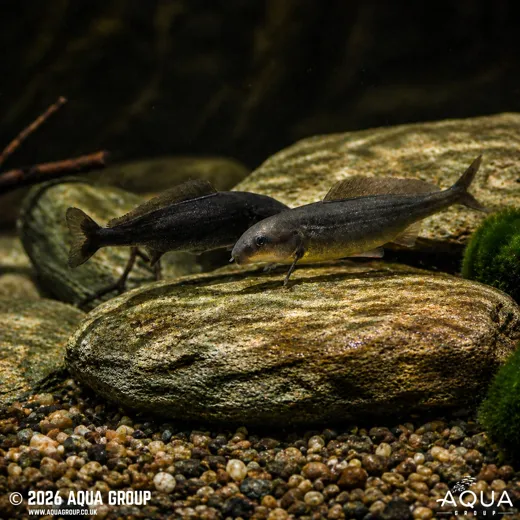
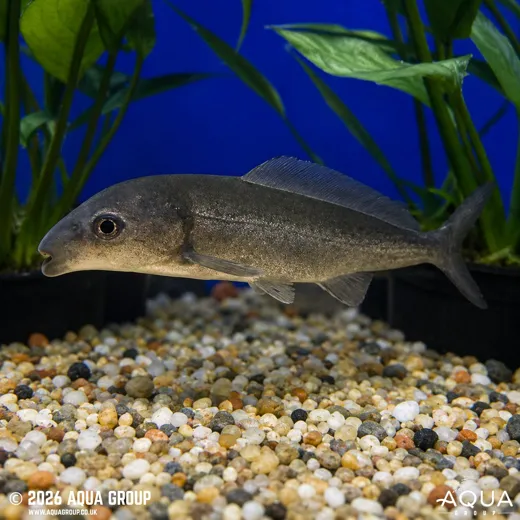
African Freshwater Dolphin (Mormyrus longirostris)
The African Freshwater Dolphin is a fascinating and unusual mormyrid from Africa, also known as the Eastern Bottlenose Mormyrid or Freshwater Dolphin Fish. It has a long, dolphin-like profile, an extended snout, intelligent behaviour and the ability to sense its surroundings using weak electrical signals. This is a specialist, large-growing freshwater fish best suited to experienced keepers with spacious aquariums, soft substrate, subdued lighting and carefully chosen tank mates.
Common Name
African Freshwater Dolphin. Also commonly referred to as the Freshwater Dolphin Fish, Eastern Bottlenose Mormyrid or Bottlenose Mormyrid.
Scientific Name (Latin)
Mormyrus
| Characteristic | Detail |
|---|---|
| Size | Up to 30 cm (12 inches) in length |
| Water Type | Freshwater |
| Temperature Range | 22–26°C (72–79°F) |
| Substrate | Soft, sandy or fine gravel |
| Lighting | Subdued lighting preferred |
| Compatibility | Best with calm, non-aggressive species |
FAQ
What is the ideal tank size for an African Freshwater Dolphin?
A spacious aquarium is required, with a minimum of 200 liters (53 gallons) to accommodate its size and active behavior.
Can this fish be kept with other fish?
Yes, but only with calm, non-aggressive species that do not compete for space or food. Avoid fast-swimming or aggressive fish.
How does the African Freshwater Dolphin sense its environment?
It uses weak electrical signals to detect nearby objects and movement, a trait known as electroreception.

Faith Black –
This fish is truly unique and very intelligent. It responds to touch and shows curiosity around the tank. I have a 200-liter tank with soft sand and subdued lighting, and it has adapted well. Needs experienced care, but the visual appeal is worth it.
Jan Dowd –
The dolphin-like appearance is stunning. It’s not a beginner fish—requires stable water conditions and a quiet environment. I paired it with a peaceful catfish and it coexists peacefully.
Paul Harris –
After months of observation, I can confirm it senses changes in the water and reacts to nearby movements. The electrical sensing behavior is fascinating and adds depth to the aquarium experience.