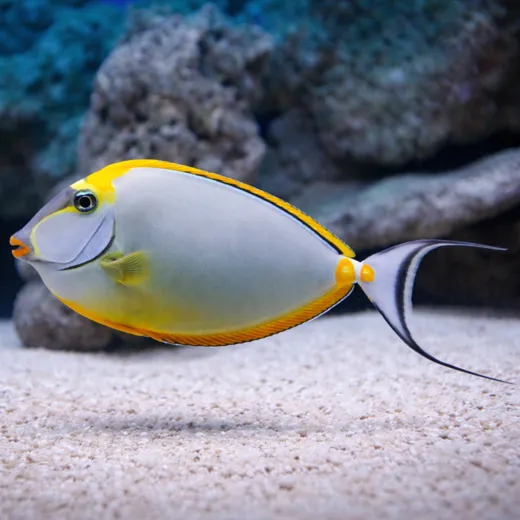
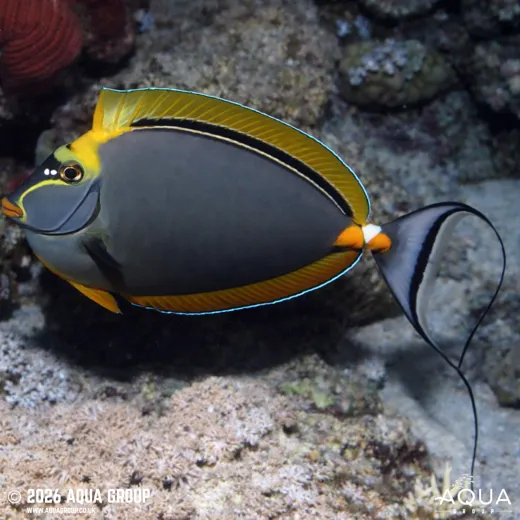
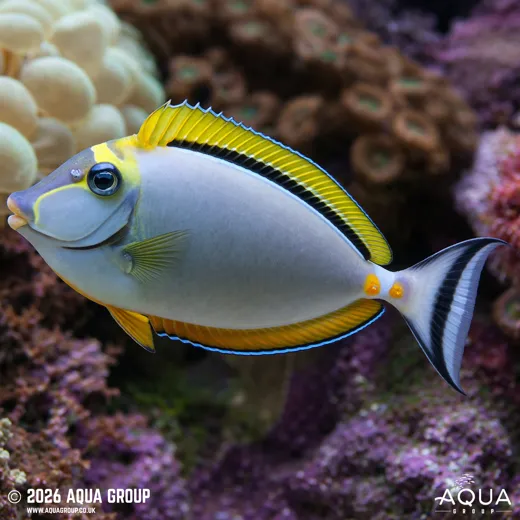
Blonde Lipstick Naso Tang
A large surgeonfish in olive and yellow with a bright orange-yellow snout that gives it the lipstick name. Handsome, peaceful, and enormous at maturity.
Feeding
Primarily herbivorous. Dried marine algae sheets offered daily, plus spirulina-based foods and some frozen meaty food.
Compatibility
Reef safe and generally peaceful for a tang, though territorial with other Naso. Needs open swimming length rather than volume alone.
Behaviour and Personality
Cruises constantly and powerfully. Males develop trailing tail filaments and a more pronounced facial profile with age.
Before You Buy
| Important Note |
|---|
| This species reaches 40 cm or more and requires a very large tank with genuine swimming length. It is routinely sold at 8 cm to people who cannot meet these requirements. |
FAQ
What is the ideal tank size for a Blonde Lipstick Naso Tang?
A very large tank with genuine swimming length is required. The fish can grow to 40 cm or more and needs ample horizontal space to swim freely.
Is the Blonde Lipstick Naso Tang compatible with other tangs?
It is generally peaceful but territorial with other Naso species. It should not be housed with other tangs, especially of the same species.
What does the Blonde Lipstick Naso Tang eat?
Primarily herbivorous. It eats dried marine algae sheets daily, along with spirulina-based foods and some frozen meaty food.

Irene Miller –
This fish is stunning in appearance and very active. After setting up a 180-liter tank with proper algae and spirulina, it adapted well. It swims constantly and shows no aggression toward other fish. Only recommend for experienced aquarists with large tanks.
Luke Parr –
Beautiful fish with a unique coloration. It took a few weeks to adjust, but once settled, it became a centerpiece. I feed it algae sheets every day and a bit of frozen food. Needs a lot of space, but worth it.
Elizabeth Dyer –
The fish is impressive, but it’s not for small tanks. I had to upgrade my setup to meet its swimming needs. It’s peaceful with corals and doesn’t eat much, but requires consistent algae feeding.