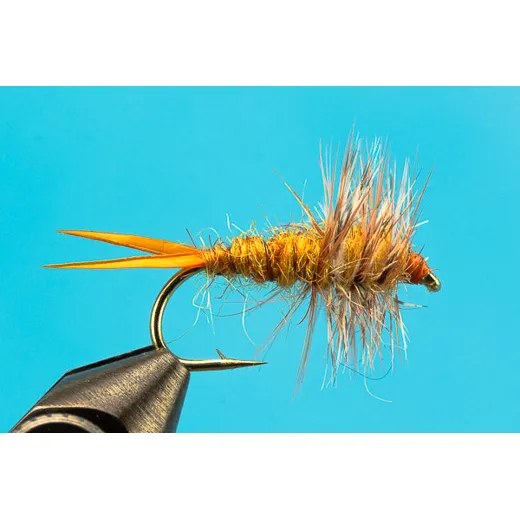
Brooks Golden Stone
A classic stonefly pattern originally invented by the late Charlie Brook, designed for use in the Yellowstone region, particularly Henry’s Fork.
Similar in design to the Montana Stone, but with more natural coloration that better matches real fly behavior in the wild.
The fly features a hackled front to simulate legs, a tapered body, and a goose biot tail neatly wrapped with wire for ribbing, enhancing its realism and durability.
As a proven pattern with a long history, it has consistently outperformed newer imitations in many fly fishing scenarios, especially in waters where Salmonflies, Stoneflies, and certain Mayflies are present.
| Feature | Description |
|---|---|
| Origin | Montana, Yellowstone area |
| Design | Hackled front, tapered body, goose biot tail, wire ribbing |
| Coloration | Natural tones, more realistic than standard versions |
| Use Case | Salmonflies, Stoneflies, Mayflies |
FAQ
What makes the Brooks Golden Stone different from the Montana Stone?
The Brooks Golden Stone features more natural coloration and a refined body design with a goose biot tail, making it more realistic in natural conditions compared to the Montana Stone.
Is this pattern suitable for all types of fly fishing waters?
Yes, it is proven effective in waters with Salmonflies, Stoneflies, and certain Mayflies, especially in streams and rivers with natural fly patterns.
Where was the Brooks Golden Stone originally developed?
It was invented in Montana, specifically for use in the Yellowstone area, particularly Henry’s Fork.

Jake Parsons –
Fished this pattern on Henry’s Fork and caught several trout. The natural coloration and realistic body shape made it stand out. Works well in both still and moving water.
Max Gray –
A reliable pattern that performs consistently. The hackled front and tail design look authentic and attract fish in clear streams.
Warren Taylor –
Used it during a spring trip and saw better results than newer imitations. The wire ribbing adds structure and the color matches the natural stoneflies perfectly.
Adrian Lambert –
Great for experienced anglers who value traditional patterns. It’s a bit more delicate than modern flies, but the results are worth it.