Dwarf Spotted Hoplisoma
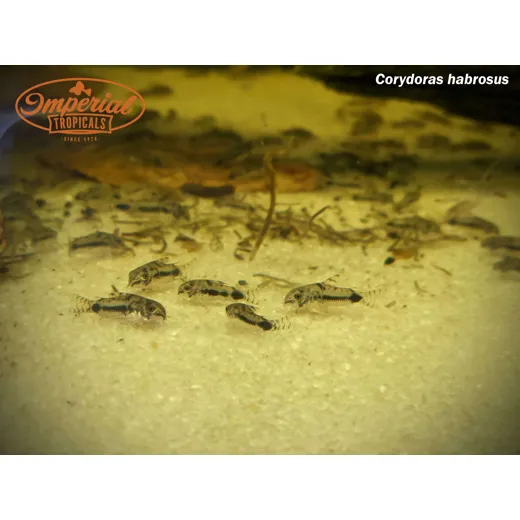
The dwarf spotted Hoplisoma is a dwarf species belonging to the Corydoradinae family, growing to only about 1.25 inches in full length. It is slightly larger than the common pygmy Gastrodermus and is more sensitive, requiring group sizes of 8 or more for optimal behavior. These fish are typically bolder when kept in larger schools.
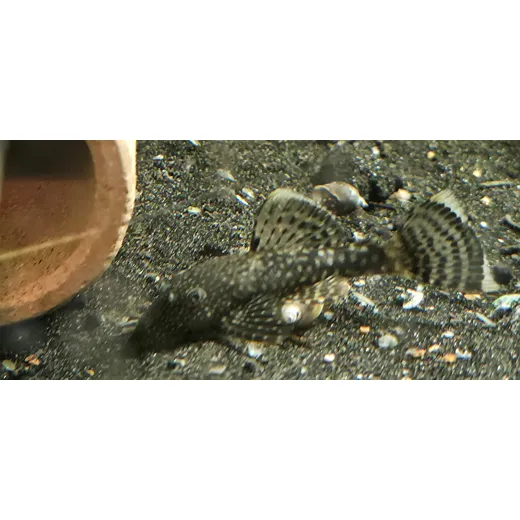
They have a light tan or silver body with a broken black line along the lateral line, a large black spot at the base of the caudal fin, small black spots on the head and upper body, and faint black stripes across their mostly clear fins.
Naturally found in Colombia and Venezuela, these fish inhabit small, slow-moving tributaries and lagoons.
| Species | Dwarf Spotted Hoplisoma |
|---|---|
| Family | Corydoradinae |
| Size | Up to 1.25 inches |
| Habitat | Slow-flowing tributaries and lagoons in Colombia and Venezuela |
| Group Size Recommendation | 8 or more |
FAQ
What is the typical size of a dwarf spotted Hoplisoma?
The dwarf spotted Hoplisoma grows to a maximum length of 1.25 inches.
How should I keep dwarf spotted Hoplisoma in my aquarium?
They should be kept in groups of 8 or more to reduce nervousness and increase confidence in their behavior.
What are the distinguishing physical features of this fish?
They have a light tan or silver body with a broken black line along the lateral line, a large black spot at the base of the caudal fin, small black spots on the head and body, and faint black stripes across their fins.
Brandon Newman –
I kept a group of 10 dwarf spotted Hoplisoma in a 20-gallon tank. They were active and calm once the school size was established. The black spots and silver body made them stand out. Good for a small community tank with compatible species.
Wendy Peake –
The fish are small and need a group to feel secure. After adding 8 of them, they stopped darting and started swimming calmly. Their coloration is quite distinctive, especially the black spots on the head.
Nicholas Hudson –
I’ve had these fish for three months now. They thrive in a slow-moving setup with soft water. The school behavior is impressive—once they settle, they become quite peaceful and easy to observe.