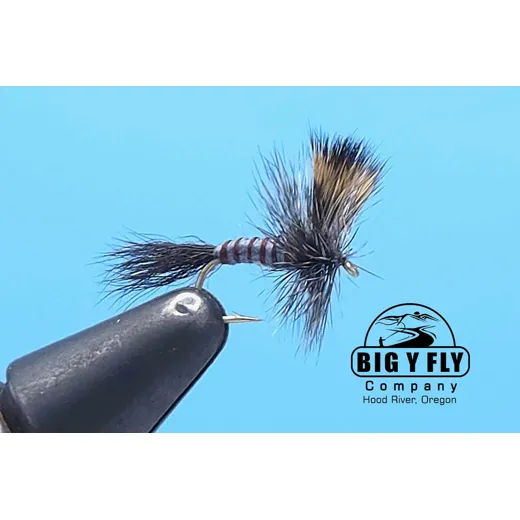
Gray Drake – Mayfly – Dry Fly
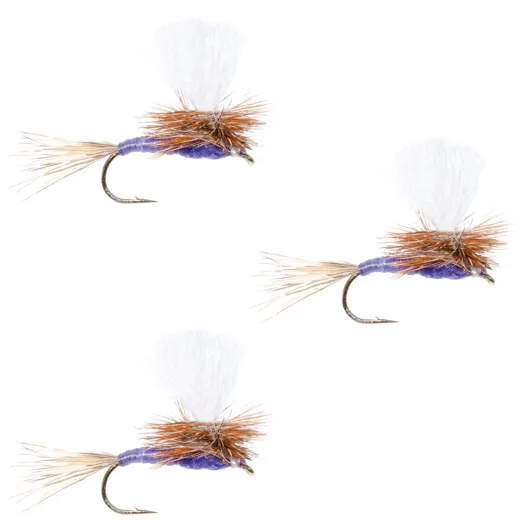
Gray Drakes are among the largest mayflies trout encounter and belong to the primitive minnow mayfly family, Siphlonuridae. Unlike most mayflies, Gray Drake nymphs commonly leave the water and crawl onto shoreline rocks, logs, and streamside vegetation before transforming into winged adults, making them more similar to stoneflies in their emergence behavior than typical mayflies. Because relatively few duns emerge directly on the water, trout often feed most aggressively when the adult females return to the surface to lay eggs or during the spinner fall. This Gray Drake dry fly closely matches the size, silhouette, and natural coloration of the adult insect, making it an excellent choice whenever these impressive mayflies are active.
Product Specifications
| Feature | Detail |
|---|---|
| Species | Gray Drake (Siphlonuridae) |
| Pattern Type | Dry Fly |
| Size | Approx. 18-20mm |
| Material | Wool, Hairs, and Synthetic Fibers |
| Usage | Trout Fishing in Streams and Rivers |
FAQ
What makes the Gray Drake dry fly different from other mayfly imitations?
The Gray Drake dry fly mimics the natural size, silhouette, and coloration of the adult Gray Drake mayfly. Unlike many mayflies, Gray Drake nymphs often emerge on land, which influences trout feeding behavior. This pattern is designed to match the insect’s appearance during its adult stage, especially during egg-laying or spinner fall.
When is the best time to use this dry fly?
Use this dry fly during the active periods of Gray Drake emergence, particularly when adult females return to the surface to lay eggs or during the spinner fall. These times often coincide with peak trout feeding activity.
Is this fly suitable for all trout species?
This dry fly is specifically designed for trout species that encounter Gray Drake mayflies in freshwater streams and rivers. It may be less effective for species not commonly found in such environments.
Sophie Taylor –
Used this fly during a morning trout session on a clear mountain stream. The imitation closely matched the natural Gray Drake, and I saw several trout take it actively. The size and color were spot-on, especially during the spinner fall. A reliable pattern for that specific habitat.
Maria Rees –
Fished with this dry fly on a slow-moving river. The fly held well in the current and attracted attention from trout. It’s a bit larger than expected, but that matches the natural insect. Good for targeting fish during emergence periods.
Michelle Forsyth –
This is one of the most accurate dry fly patterns I’ve used. The detail in the wing and body shape is impressive. I caught two fish in a single cast during the early afternoon when the females were returning to the surface. Highly recommended for Gray Drake season.