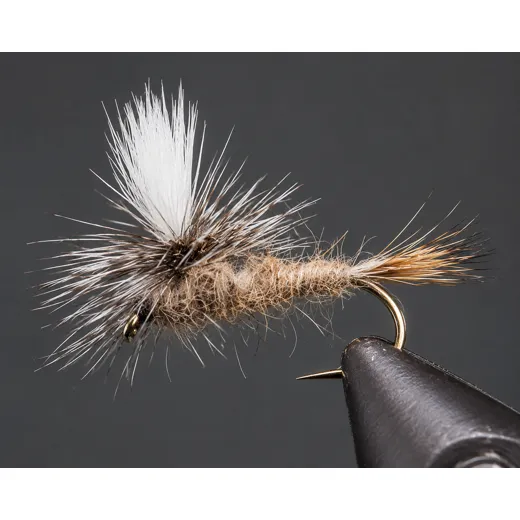
Hare’s Ear – Parachute
The Hare’s Ear – Parachute combines the proven effectiveness of the classic Hare’s Ear pattern with the visibility and presentation advantages of a parachute dry fly. Designed to imitate a wide range of emerging mayflies and general aquatic insects, this versatile pattern is a dependable producer in rivers, streams, and tailwaters.
Its natural buggy appearance, low-riding profile, and parachute post allow the fly to drift realistically in the surface film while remaining easy for anglers to track in varying light conditions. The Hare’s Ear – Parachute is especially effective during mayfly hatches and as a searching pattern when trout are feeding selectively near the surface.
A must-have attractor and hatch-matching fly for anglers targeting trout in natural waters.
| Features | Description |
|---|---|
| Pattern Type | Hare’s Ear with parachute body |
| Imitates | Emerging mayflies and aquatic insects |
| Best Use | Rivers, streams, tailwaters |
| Effective During | Mayfly hatches, surface feeding |
FAQ
What makes the Hare’s Ear – Parachute different from a standard Hare’s Ear?
The Hare’s Ear – Parachute adds a parachute post and wider profile, improving visibility and surface drift while maintaining the natural appearance and action of the classic Hare’s Ear pattern.
Is this fly suitable for use in still waters?
It is primarily designed for moving waters like rivers and streams. Use with caution in still waters where surface drift may not be as effective.
Can this fly be used during low-light conditions?
Yes, the parachute post enhances visibility in varying light conditions, making it easier to track and present effectively.
Caroline Berry –
Used this fly during a late spring mayfly hatch on a cold stream. It drifted naturally and attracted multiple trout. The visibility in the morning light was excellent and it stayed on the surface without sinking too quickly.
Connor Harris –
Good for surface feeding trout. Worked well during a dry period when the water was clear. A bit more visible than a standard Hare’s Ear, which helps when fishing in open areas.
Jacob Martin –
Fished it in a tailwater with light current. The parachute design kept it floating and the action mimicked a real insect. Caught two fish in under 20 minutes.
Donna Carr –
Effective during a rising hatch. The fly stayed on the surface and was easy to see, even in overcast conditions. A reliable option for surface presentations.
Chloe McDonald –
Perfect for matching emerging mayflies. The natural look and drift made it stand out to trout. I’ve used it in multiple streams and it consistently performs well.