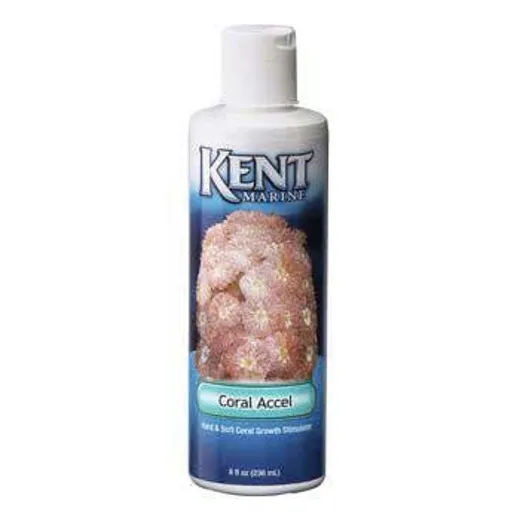
Kent Marine Coral Accelerator 8 oz.
Shake well immediately before use. Invertebrate foods should be used sparingly in a marine aquarium to prevent loss of water quality.
Add 1 to 2 teaspoons per 50 gallons daily, depending on animal load. One capful from an 8 oz. or 16 oz. bottle equals 5 ml (1 teaspoon). Apply in an area of high water flow for optimal results.
For best results, refer to the use and interaction section on the opposite sidebar.
Target Method: Individual animals can be targeted using this product, which is the most efficient method and causes less pollution in the aquarium.
Use a plastic syringe available at any drug store to dispense the product directly over the animal where water flow will carry it.
| Usage | Amount | Volume |
|---|---|---|
| Per 50 gallons | 1 to 2 teaspoons | 5 ml (1 teaspoon) |
| Per bottle (8 oz) | 1 capful | 5 ml |
FAQ
Can this product be used on all types of marine invertebrates?
This product is specifically formulated for coral and invertebrate use. It should be used with caution and only as directed for the specific species in your aquarium.
How often should I apply the product?
Apply 1 to 2 teaspoons per 50 gallons daily, depending on animal load. Adjust based on the number and activity level of invertebrates.
Is there a risk of overfeeding?
Yes, overuse can degrade water quality. Nitrite testing is recommended to monitor dosage and avoid overdosing.
Wendy Jackson –
I’ve been using this product for two months on my live coral setup. The coral growth has improved noticeably, especially on the outer branches. I use one teaspoon per 50 gallons daily and monitor water parameters closely. It’s easy to apply with the syringe method and doesn’t seem to affect water chemistry.
Andrea Scott –
Works well for targeted coral feeding. I use it sparingly and only when needed. The syringe method is precise and helps avoid overfeeding. I noticed better coloration in my polyps after a few weeks.
Matt Rees –
It’s effective but requires careful dosing. I had to adjust the amount based on my tank’s animal load. I recommend testing water nitrite levels to ensure I’m not overusing it.