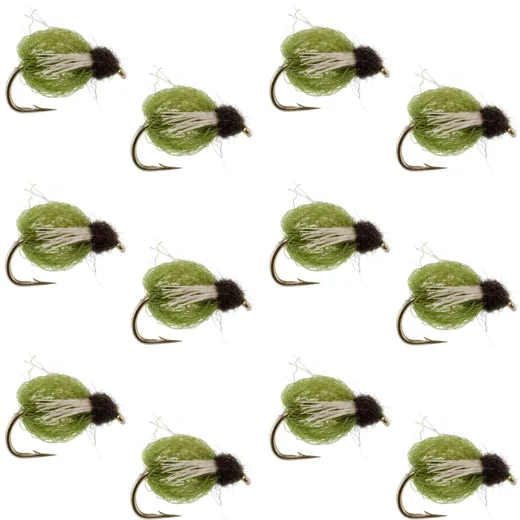
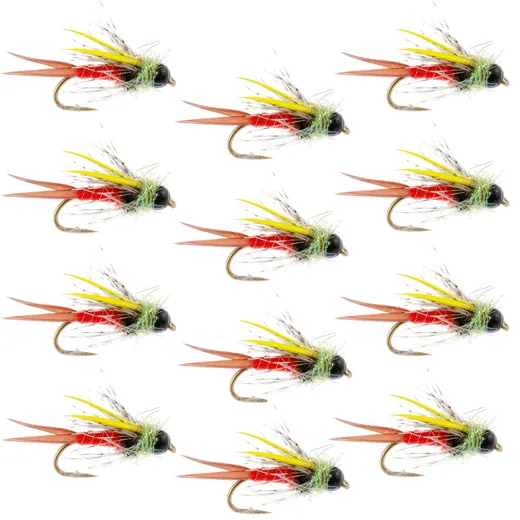
LaFontaine Olive Deep Sparkle Caddis Pupa
Created by Gary LaFontaine in the mid-1970s after three years of scuba diving to observe live caddis behavior underwater, this pattern is featured in his 1981 book Caddisflies. It imitates the early emergence stage of caddis pupae drifting near the bottom.
Early-Stage Caddis Pupa Imitation – Represents caddis pupae as they exit their cocoons and drift along the riverbed or mid-water column during spring through fall hatches. The sparkle yarn mimics trapped air bubbles around the pupa.
| Specification | Detail |
|---|---|
| Product Type | Caddis Pupa Fly |
| Hook Size | 12 |
| Quantity | 1 Dozen |
| Color | Olive |
| Material | Sparkle Yarn, Wool, Synthetic Threads |
FAQ
What does the sparkle yarn in the fly imitate?
The sparkle yarn mimics trapped air bubbles around the caddis pupa as it drifts in the water.
When is this fly most effective to use?
This fly is effective during spring through fall hatches when caddis pupae emerge and drift along riverbeds or mid-water columns.
Is the hook size 12 suitable for most fly fishing conditions?
Yes, hook size 12 is appropriate for targeting smaller caddis pupae in clear, flowing waters.
Nicola Hudson –
This fly performs well in spring and early summer when caddis hatches are active. The olive color blends naturally with the riverbed, and the sparkle effect makes it stand out in the current. I caught several trout using it during a morning drift.
Victor Black –
The detail in the pupa shape is accurate and the sparkle yarn adds a realistic touch. It’s a bit delicate, so I handle it carefully when tying. Works well in moderate currents.
Audrey Johnston –
I’ve used this pattern on several rivers and it consistently attracts fish during midday hatches. The imitation of air bubbles is very convincing and makes a noticeable difference in catch rates.
Brian Morrison –
Good quality material and accurate design. The fly holds up well in water and doesn’t fray easily. I recommend it for early emergence hatches in spring.