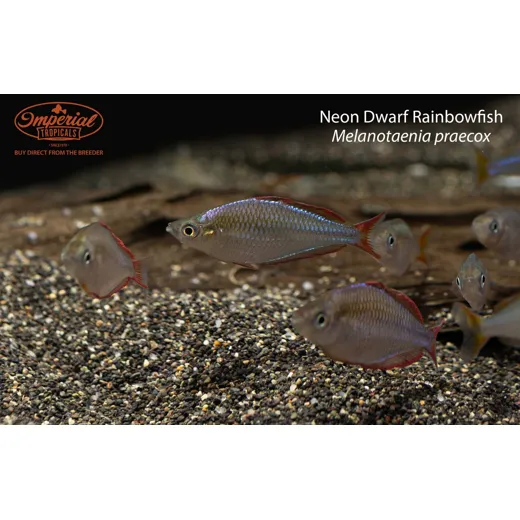
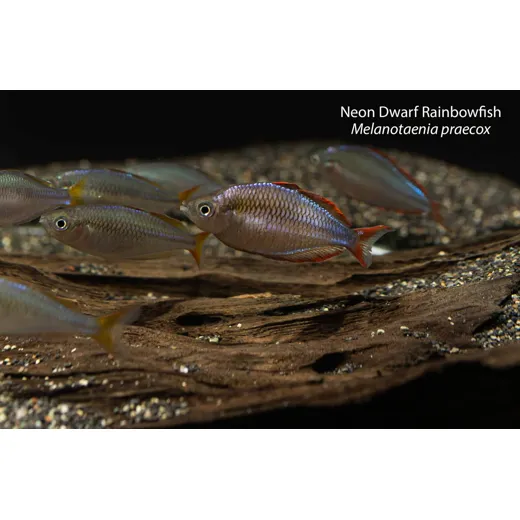
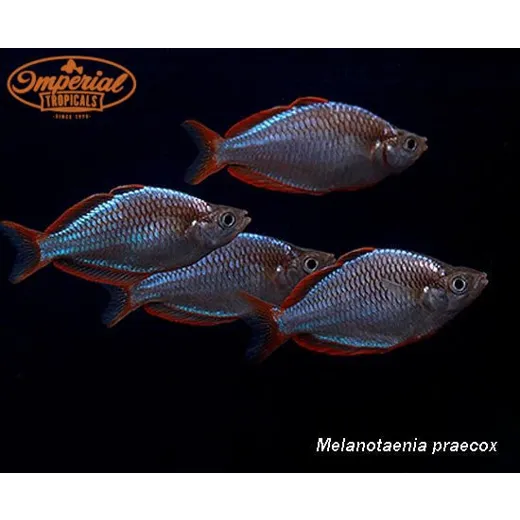
Neon Dwarf Rainbowfish
Scientific Name: Melanotaenia praecox
Native to West Papua, the Neon Dwarf Rainbowfish is a small, vibrant species known for its bright blue body and colorful fins. Males display vivid red fins, while females have orange-yellow fins. Due to their compact size, they are ideal for small community tanks or breeding setups.
These omnivorous fish thrive on a diet of high-quality flake food supplemented with protein sources like baby brine shrimp. They prefer clean water and are adaptable to a range of water conditions. Regular water changes promote consistent spawning, as they lay eggs in weedy areas—often mimicked using a yarn mop.
| Feature | Detail |
|---|---|
| Size | Small |
| Sexual Dimorphism | Males: red fins; Females: orange-yellow fins |
| Diet | Omnivorous (flakes + baby brine shrimp) |
| Spawning Behavior | Spawns frequently with regular water changes; eggs laid in weedy areas |
FAQ
What is the ideal tank size for Neon Dwarf Rainbowfish?
They are best suited for small community tanks due to their compact size.
Do male and female Neon Dwarf Rainbowfish look different?
Yes, males have bright red fins, while females have orange-yellow fins.
How should I feed them to support breeding?
Feed a balanced diet of high-quality flake food with supplemental protein such as baby brine shrimp.


Vanessa Rampling –
The Neon Dwarf Rainbowfish are stunning with their bright blue bodies and colorful fins. I kept them in a 10-gallon tank with other small community fish. After a few weeks of regular water changes, they started spawning regularly. The fish are active and peaceful, making them a great addition to a small aquarium.
Keith Murray –
I was impressed by how easy they are to care for. They eat flake food and baby brine shrimp without much effort. The males are especially vibrant, and the females are quite attractive too. I’ve seen multiple spawning attempts since setting up the tank with a yarn mop.
Diana Anderson –
These fish are perfect for beginners. They don’t require strict water parameters and adapt well to a variety of conditions. I noticed they spawn almost every few weeks with consistent water changes. The colors are vivid and the fish are very active in the tank.