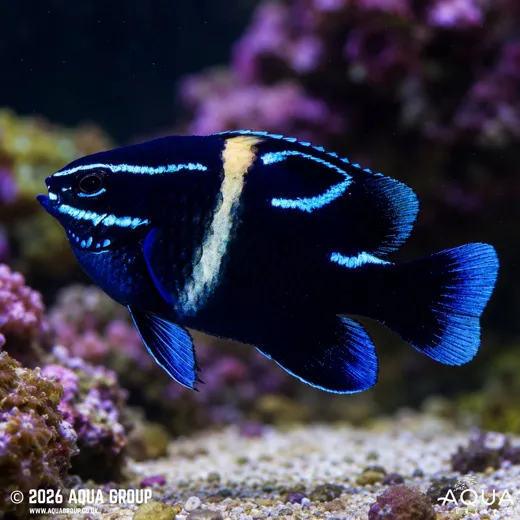
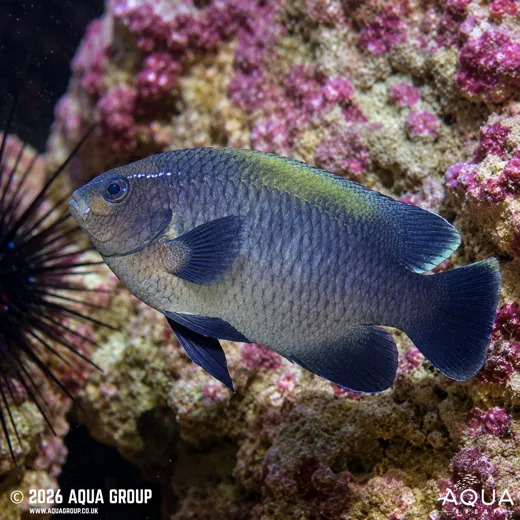
Neon Velvet Damsel (Neoglyphidodon oxyodon)
The Neon Velvet Damsel, Neoglyphidodon oxyodon, is a striking Western Pacific damselfish admired for its electric blue juvenile colouration, dark velvet body tones and bold reef presence. Also known as the Bluestreak Damselfish or Blue Velvet Damsel, this species is hardy and eye-catching, but it should be chosen with care as it becomes increasingly territorial as it matures. In nature, it inhabits very shallow coral reef flats and lagoon areas, often close to branching Acropora coral heads where it can shelter quickly.
Common Names
- Neon Velvet Damsel
- Bluestreak Damselfish
- Blue-Streak Damselfish
- Blue Velvet Damsel
- Javanese Damselfish
- Java Damselfish
Specifications
| Feature | Detail |
|---|---|
| Scientific Name | Neoglyphidodon oxyodon |
| Origin | Western Pacific |
| Habitat | Shallow coral reef flats, lagoon areas |
| Adult Size | Up to 6 cm (2.4 inches) |
| Behavior | Territorial as it matures; active and reef-associated |
FAQ
What is the typical size of a Neon Velvet Damsel when mature?
The Neon Velvet Damsel reaches a maximum size of up to 6 cm (2.4 inches) when mature.
Is the Neon Velvet Damsel suitable for a beginner aquarium?
This species can be suitable for experienced aquarists due to its territorial behavior as it matures. Beginners should exercise caution and ensure adequate space and compatible tank mates.
What kind of environment does the Neon Velvet Damsel prefer in an aquarium?
It prefers shallow reef environments with branching corals such as Acropora for shelter. A well-maintained, reef-rich tank with good water flow and stable conditions is recommended.

Kevin Baker –
The Neon Velvet Damsel is a vibrant addition to my reef tank. The blue coloration is stunning, especially in the juvenile stage. I’ve noticed it becomes more territorial after a few months, so I made sure to provide plenty of coral structures for hiding. It’s active and adds a lot of visual interest.
Harry Rutherford –
I bought this damselfish for a new reef setup. It’s very colorful and stays near the Acropora coral, which is perfect. After a few weeks, it started showing signs of aggression toward smaller fish, so I adjusted the tank layout to give it more space.
Neil May –
The fish arrived healthy and quickly adapted to the tank. Its blue streaks are vivid and it’s very active during the day. I keep it in a 120-liter reef tank with plenty of live rock and branching corals. It’s a great visual focal point.