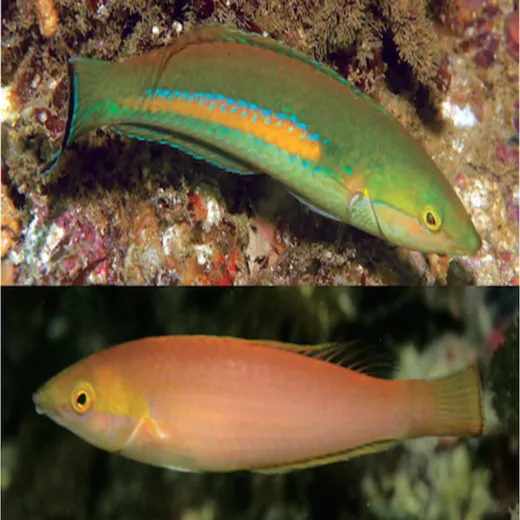
Polockorum Pencil Wrasse
The Polackorum Pencil Wrasse (Pseudojuloides polackorum) is a vibrant, slender marine fish from the southwestern Indian Ocean (South Africa to Kenya) known for its distinct coloration, peaceful nature, and suitability for reef aquariums. It is an expert-level fish that requires a sandy substrate to burrow and a diet of meaty foods. It may occasionally nip at small invertebrates.
Key Characteristics
- Scientific Name: Pseudojuloides polackorum
- Common Names: African Pencil Wrasse, Polacks
- Appearance: Slender body with bright, iridescent markings and often a black caudal fin (tail)
- Size: Males reach about 12.3 cm (5 inches)
Aquarium Care
- Difficulty: Expert
- Tank Size: At least 50 gallons with plenty of live rock
| Parameter | Value |
|---|---|
| Origin | Southwestern Indian Ocean (South Africa to Kenya) |
| Substrate Requirement | Sandy substrate for burrowing |
| Diet | Meaty foods; may nip small invertebrates |
| Behavior | Peaceful, but requires careful tank setup |
FAQ
What is the typical size of a male Polackorum Pencil Wrasse?
Males reach about 12.3 cm (5 inches) in length.
Is the Polackorum Pencil Wrasse suitable for beginner aquariums?
No, it is classified as an expert-level fish due to its specific care requirements and behavior.
What kind of substrate does this fish require?
A sandy substrate is necessary for burrowing behavior.

Rachel Metcalfe –
I’ve had this wrasse for six months in a 75-gallon reef tank. It’s active and colorful, especially during the day. The fish enjoys the sandy bottom and spends time burrowing. I feed it mysis and krill regularly. It’s peaceful with other fish, though it does occasionally nibble on small crustaceans. Requires a lot of attention, but worth it for the visual appeal.
Melanie Hill –
The fish arrived healthy and looks stunning with its iridescent markings. I made sure to include a deep sand bed and provide meaty foods. It’s not aggressive, but it does need a large tank and stable water conditions. A good choice for experienced reef keepers.
Nicholas Lawrence –
It’s a beautiful fish, but I found it challenging to keep. The tank needs to be large and well-maintained. I had to adjust feeding habits to avoid overfeeding. It’s not for beginners, but it adds a lot of visual interest to the tank.