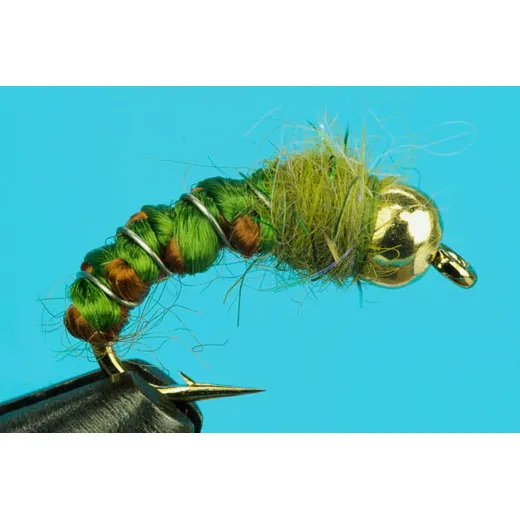
Polish Anchor-Beadhead
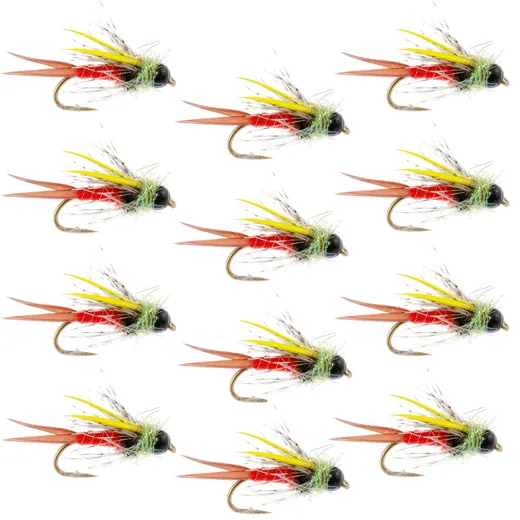
A Czech pattern, this heavy caddis pupa imitating pattern originated in Europe and is quickly becoming a staple in North American fly boxes across the continent.
The Polish Anchor was originally designed to reduce the need for split shot. Its tightly woven body and large brass bead are engineered to sink quickly, making it effective in deep, fast-moving water.
Enhanced with olive, brown, and sparkle throughout the body, the pattern is visually appealing and difficult for low-lying trout to ignore.
Best fished in deep, swift-moving sections during warm summer days. Also effective for imitating giant caddis.
| Feature | Detail |
|---|---|
| Origin | Czech Republic |
| Weight | Heavy |
| Beading | Brass beadhead |
| Best Use | Deep, fast-moving water; warm summer days |
FAQ
What type of water is best for fishing the Polish Anchor?
Best fished in deep, quick-moving slots on warm summer days.
Is the Polish Anchor effective for giant caddis?
Yes, it is great for imitating giant caddis.
What makes the Polish Anchor sink quickly?
The tightly woven body and large brass beadhead contribute to its rapid sinking.
Alan Rutherford –
Fished in a deep riffle during a warm afternoon and got multiple strikes. The weight and color match perfectly with the caddis pupa in the water. A reliable pattern for low-lying trout.
Joanne Glover –
Used it in a fast-moving stream and saw good action. The brass bead helps it sink fast, and the olive and brown tones blend well with the natural environment.
Carol Pullman –
This pattern worked well in deep water where other flies didn’t perform. The design is solid and the action is natural when fished with a slow retrieve.