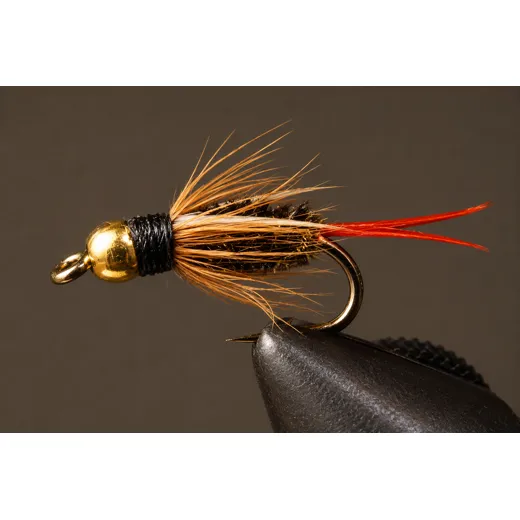
Stone Creek™ Prince Nymph – Bead Head & Standard
The Stone Creek™ Prince Nymph is one of the most versatile and productive nymph patterns ever created. Known for its distinctive white biot wings, peacock herl body, and buggy profile, this classic fly effectively imitates a wide variety of aquatic insects and consistently produces trout in rivers, streams, tailwaters, lakes, and ponds.
Available in both Standard and Bead Head styles, the Prince Nymph excels as both an imitation and attractor pattern. While often associated with stonefly nymphs, it also suggests mayfly nymphs, caddis larvae, and other subsurface food sources that trout encounter throughout the year.
The Standard version offers a natural drift in shallower water, while the Bead Head version provides a more controlled presentation and better visibility in deeper or faster currents.
| Style | Use Case | Key Features |
|---|---|---|
| Standard | Shallow water, natural drift | Soft profile, natural movement, ideal for slow currents |
| Bead Head | Deeper water, faster currents | Improved visibility, better control, consistent presentation |
FAQ
What makes the Prince Nymph effective in different water conditions?
The Prince Nymph’s distinctive biot wings and peacock herl body allow it to mimic natural aquatic insects. Its versatile profile works well as both an imitation and attractor for trout in various environments, including rivers, streams, and lakes.
Is the Prince Nymph suitable for both beginners and experienced anglers?
Yes, the Prince Nymph is widely used by anglers of all skill levels due to its proven effectiveness and predictable behavior in different water conditions.
Can the Prince Nymph be used in both still and moving water?
Please contact customer service
Hannah Campbell –
Used the Prince Nymph in a cold stream and caught several trout on the standard version. The drift was natural and the fly looked realistic. Great for early season when nymphs are active.
Karen McDonald –
Switched to the bead head version in a fast-moving river and found it much easier to keep the fly in place. Trout took it consistently, especially during midday when the water was moving quickly.
Diane Langdon –
Felt the standard version worked better in shallow areas, while the bead head was more effective in deeper sections. Overall, a reliable pattern for nymph fishing.
David Walsh –
Caught a big trout on the Prince Nymph during a late spring trip. It mimicked the insects well and stayed on the surface without sinking too fast.