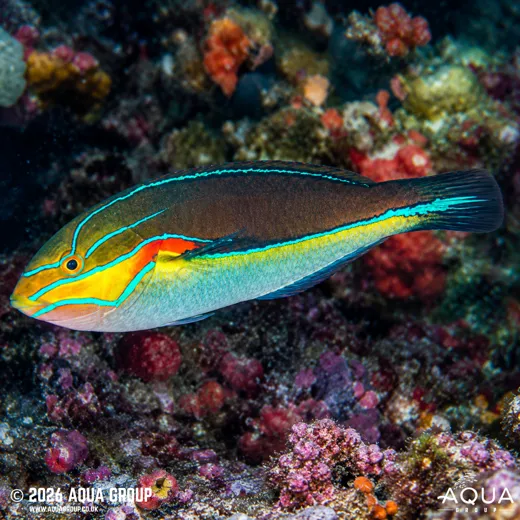
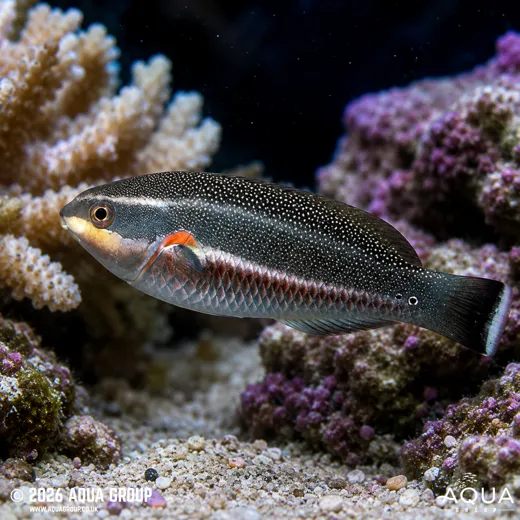
Red Shoulder Wrasse
A small, fast wrasse with red shoulder markings and fine blue lines. Constantly active, and with a poor record for adapting to prepared food.
Feeding
Feeds continuously on tiny invertebrates picked from rock and sand. Rarely takes prepared food readily; needs a mature system with an abundant pod population and several feeds daily.
Compatibility
Reef safe with corals but hunts small invertebrates. Peaceful but easily outcompeted.
Behaviour and Personality
Never stops moving, picking constantly at surfaces. Buries in sand to sleep.
Before You Buy
| Requirement | Detail |
|---|---|
| Mature System | Must have a fully established live food supply |
| Live Food | Abundant pod population required |
| Feeding Frequency | Several daily feeds needed |
| System Size | Larger tanks recommended due to high metabolism |
FAQ
Does the Red Shoulder Wrasse accept prepared food?
Rarely. It primarily feeds on live invertebrates and has a poor record of accepting prepared food.
Is it safe to keep with corals?
Yes, it is reef-safe with corals, though it hunts small invertebrates and may outcompete them.
How active is this fish?
It is constantly active, never stopping movement, and spends time picking at surfaces or burying in sand to sleep.

Leah Howard –
The Red Shoulder Wrasse is very active and adds a lot of movement to the tank. It only eats live food, so I had to set up a refugium with copepods. After a few weeks, it started feeding regularly. It’s peaceful with corals but does eat small invertebrates.
Cameron Forsyth –
I kept it in a 55-gallon tank with a mature system. It didn’t eat prepared food at first, but after adding live copepods daily, it began to thrive. It’s a good addition for active reef tanks, but requires consistent live food supply.
Steven Peake –
This wrasse is fascinating to watch. It never stops moving and is always exploring the rocks and sand. I had to maintain a strong live food population, but once established, it became a regular part of the tank.