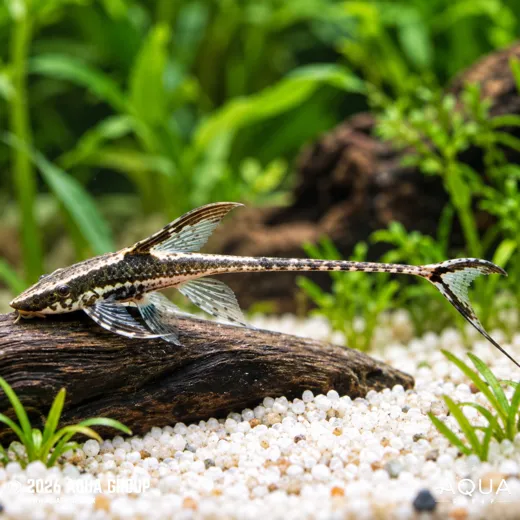
Royal Farlowella (Sturisoma panamense)
The Royal Farlowella is an elegant freshwater whiptail catfish admired for its long slender body, extended fin rays and peaceful grazing behaviour. Also known as the Royal Whiptail Catfish or Royal Twig Catfish, this species is best suited to mature, well-oxygenated aquariums with stable water quality, driftwood, smooth surfaces and peaceful tankmates. It is a specialist community fish rather than a basic algae eater and should be provided with a varied diet and calm conditions.
Common Name
Royal Farlowella, Royal Whiptail Catfish, Royal Twig Catfish, Panamanian Royal Farlowella
Scientific Name (Latin)
Sturisoma panamense
Maximum Size
Approximate maximum size not specified in product description.
| Characteristic | Detail |
|---|---|
| Body Shape | Long and slender |
| Fin Rays | Extended |
| Behavior | Peaceful grazing |
| Water Conditions | Mature, well-oxygenated, stable water quality |
| Preferred Habitat | Driftwood, smooth surfaces |
| Diet | Varied diet, not a basic algae eater |
FAQ
What kind of tank environment does the Royal Farlowella require?
The Royal Farlowella thrives in mature, well-oxygenated aquariums with stable water parameters. It prefers environments with driftwood, smooth surfaces, and calm conditions. Peaceful tankmates are recommended.
Is the Royal Farlowella suitable for beginner aquarists?
No, this species is best suited for experienced aquarists who can maintain stable water conditions and provide a calm, mature aquarium environment.
What should I feed my Royal Farlowella?
It requires a varied diet and is not a basic algae eater. Offer a mix of high-quality sinking pellets, frozen or live foods such as bloodworms or brine shrimp to ensure proper nutrition.

Ruth Abraham –
The Royal Farlowella is a stunning addition to my community tank. It moves gracefully and doesn’t stress other fish. I’ve maintained stable water conditions and provide a varied diet, which keeps it active and healthy.
Angela Kerr –
Beautiful fish with a unique appearance. I noticed it grazes on algae and detritus, but I supplement with frozen foods. The tank needs to be mature and well-maintained, which I’ve been able to achieve.
Audrey May –
After a few months, the fish has become a regular part of the tank. It’s peaceful and doesn’t chase or disturb other species. I appreciate the detailed care instructions in the product description.